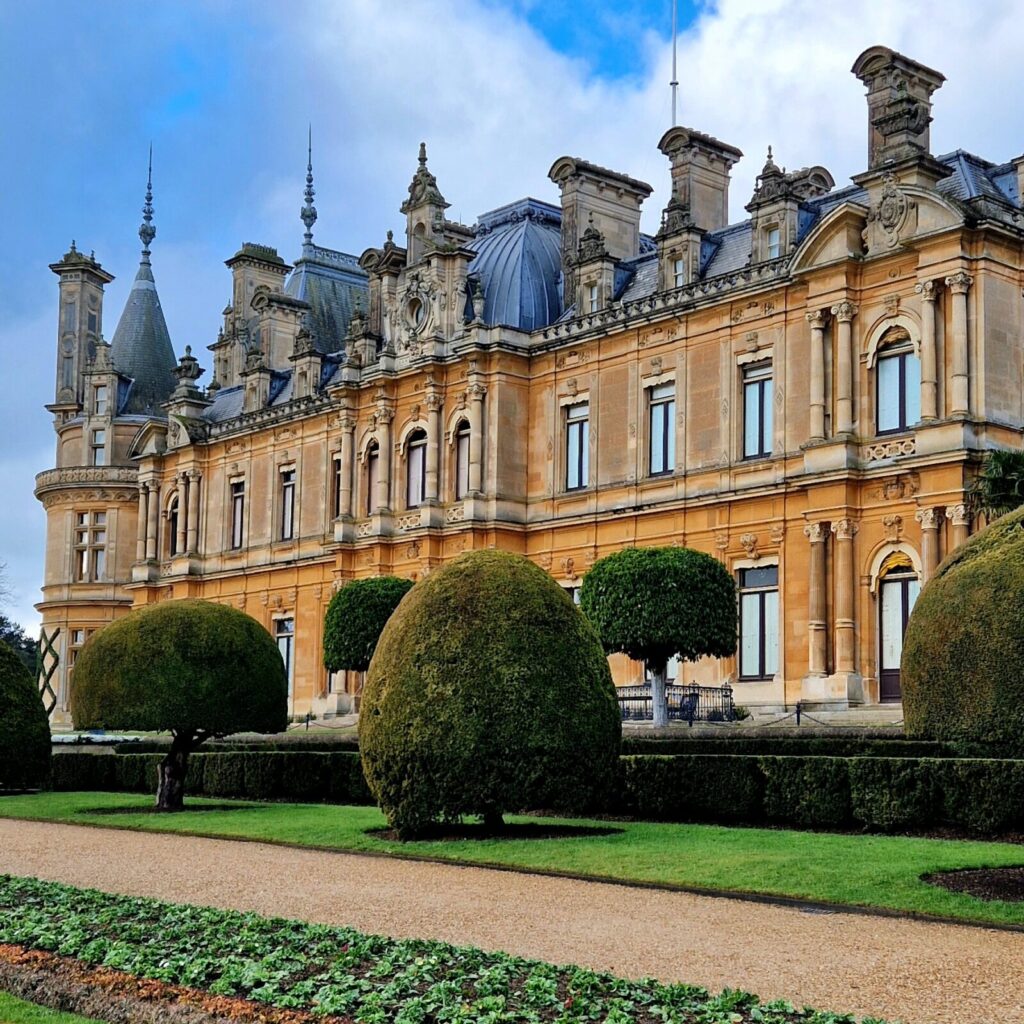
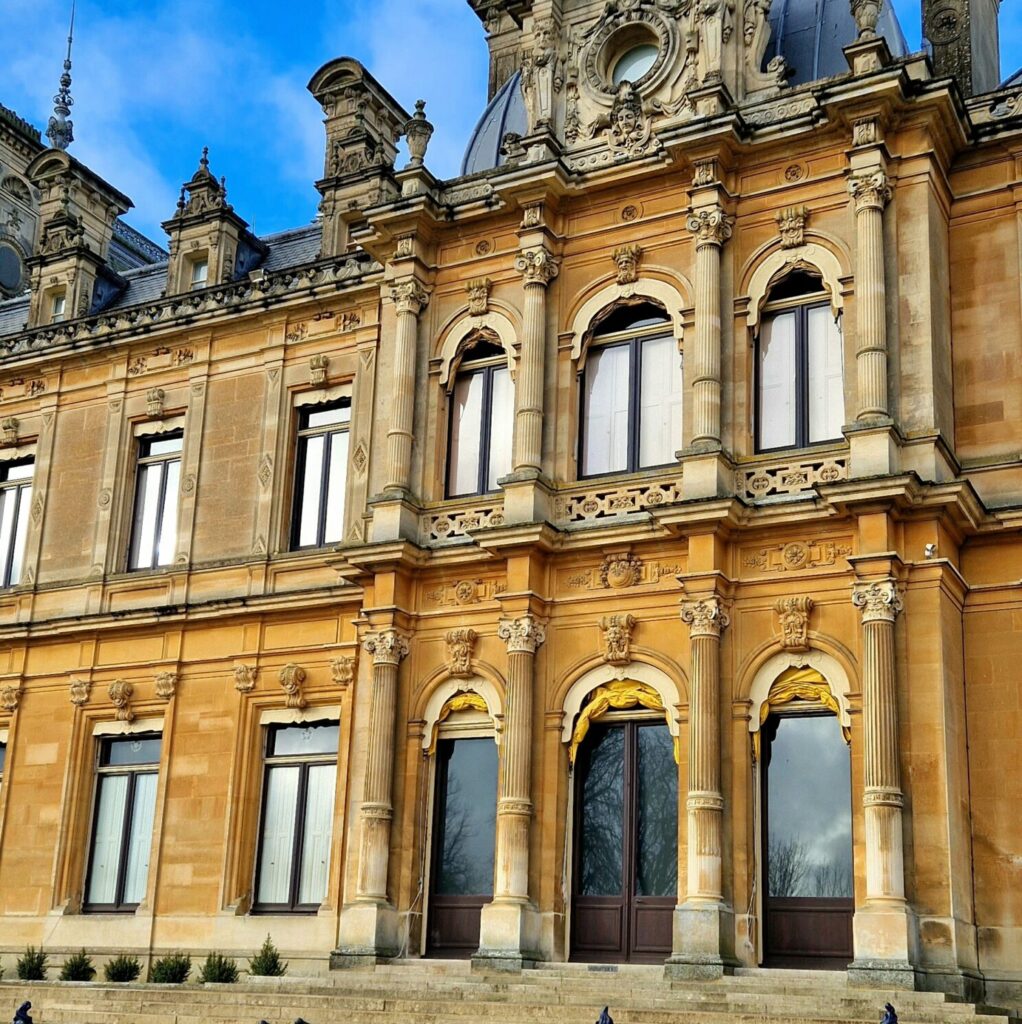
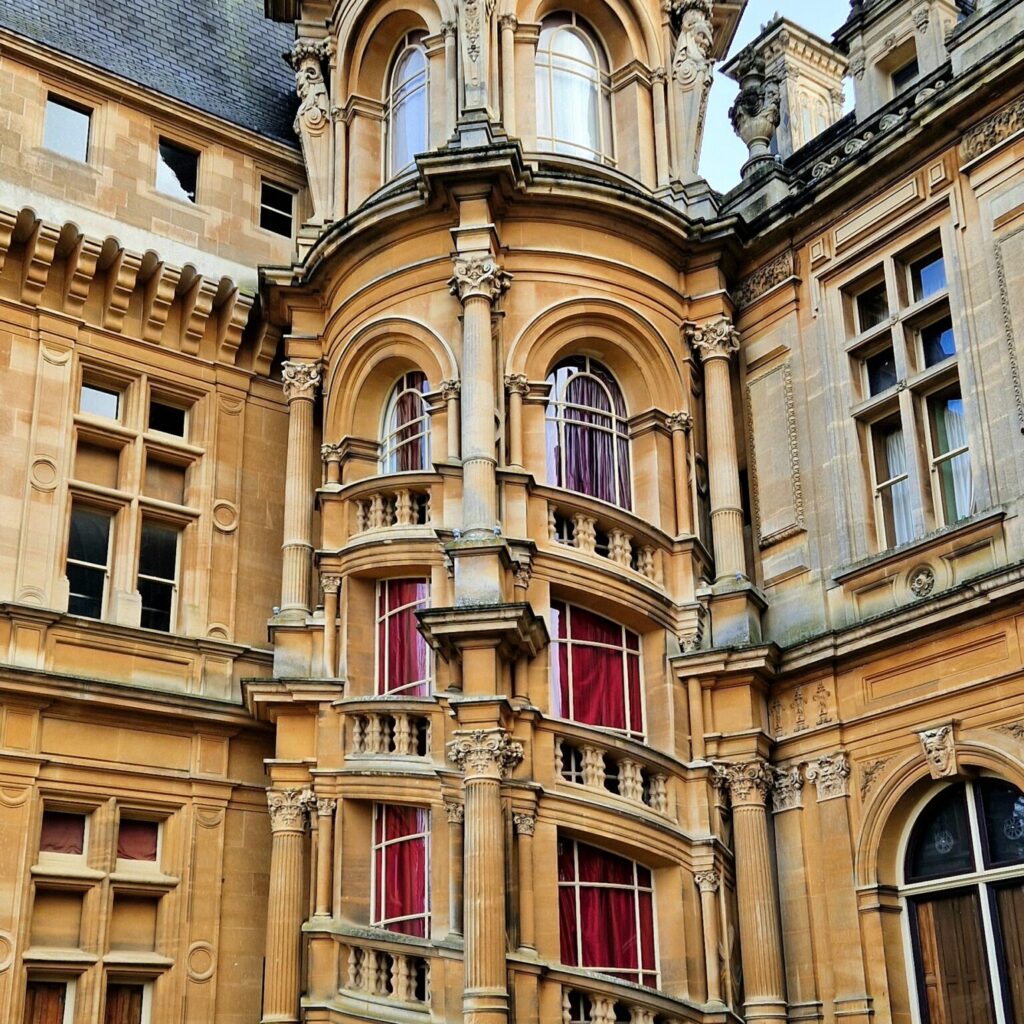
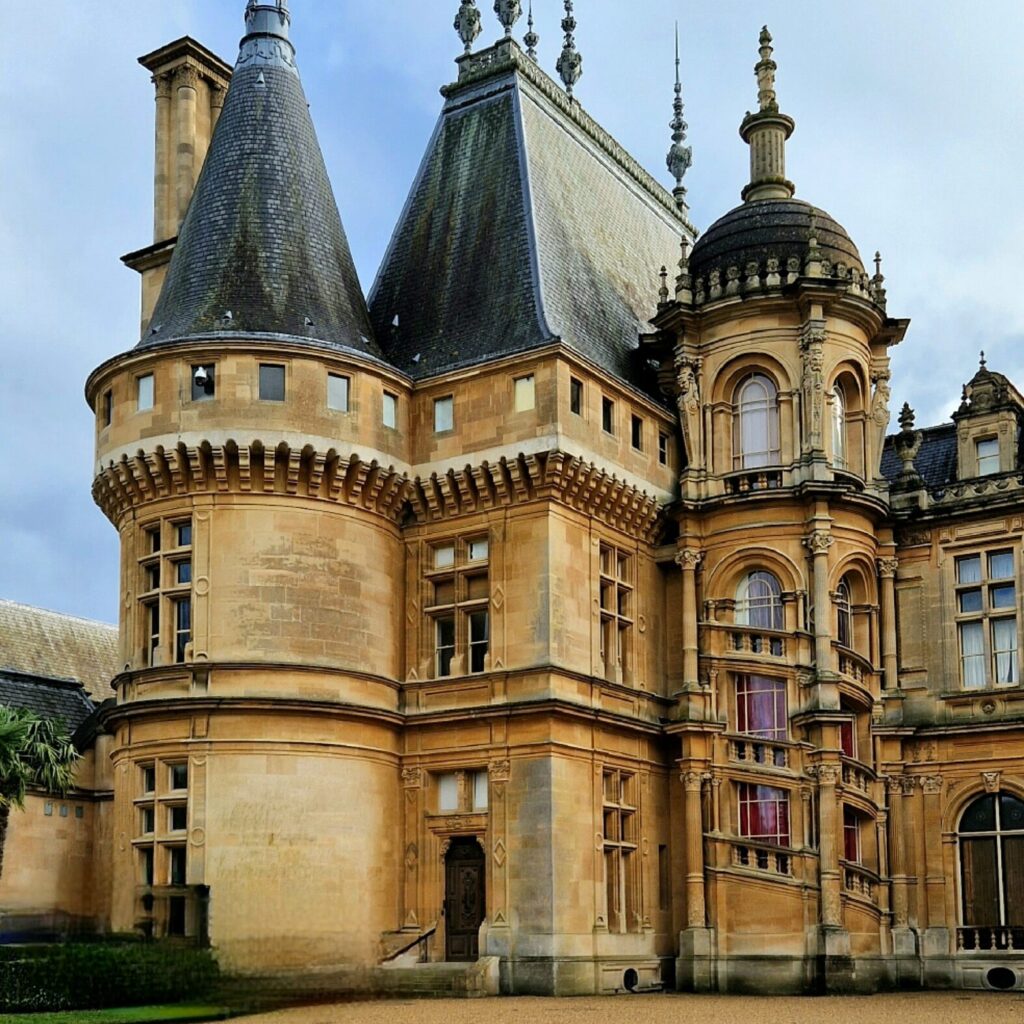
Waddesdon Manor, a French Renaissance–style château in the middle of the English countryside.
Address: Waddesdon, near Aylesbury, Buckinghamshire, HP18 0JH.
Do you expect to stumble upon a French Renaissance château in the middle of the English countryside? I certainly didn’t. Yet that is exactly what you find at Waddesdon Manor, rising unexpectedly from the Buckinghamshire landscape. It was the vision of Baron Ferdinand de Rothschild, a member of the famous banking family.
Before our visit, I knew very little about Ferdinand de Rothschild, and that, to me, is part of the joy of visiting historic houses. They are not just places for a pleasant walk or a day out; they are treasure troves of stories, layered with personal histories, ambitions and eccentricities. Waddesdon, one of the National Trust’s most visited properties, has plenty to say if you take the time to listen.
Baron Ferdinand de Rothschild (1839–1898) was born in Paris but settled permanently in England in 1860. A banker, art collector and politician, he married his cousin Evelina from the English branch of the family. Tragically, Evelina and their baby died during childbirth in 1866, just a year after their marriage. With a demanding life in London, Ferdinand longed for a country estate where he could escape during the summer months and host family and friends in style.
In 1874 he purchased the Waddesdon estate from the Duke of Marlborough and set about creating something extraordinary. Determined to build a Renaissance château, he appointed the French architect Gabriel-Hippolyte Destailleur, who had already worked for other members of the Rothschild family. Remarkably, the house was completed in under five years — a testament to Ferdinand’s drive and resources. What emerged was a weekend retreat of pure indulgence: a grand house filled with art, pleasure gardens, glasshouses overflowing with exotic plants, and even a private aviary.
Once finished, Waddesdon quickly became famous for Ferdinand’s “Saturday to Monday” house parties. His guest list included leading figures from social, cultural and political life, among them the Prince of Wales. Queen Victoria herself visited in 1890. Alongside his love of entertaining, Ferdinand was a passionate collector. From childhood he had been surrounded by art, even helping to pack his father’s treasures, and collecting remained a lifelong obsession.
Waddesdon Manor in Buckinghamshire
Waddesdon Manor in Buckinghamshire
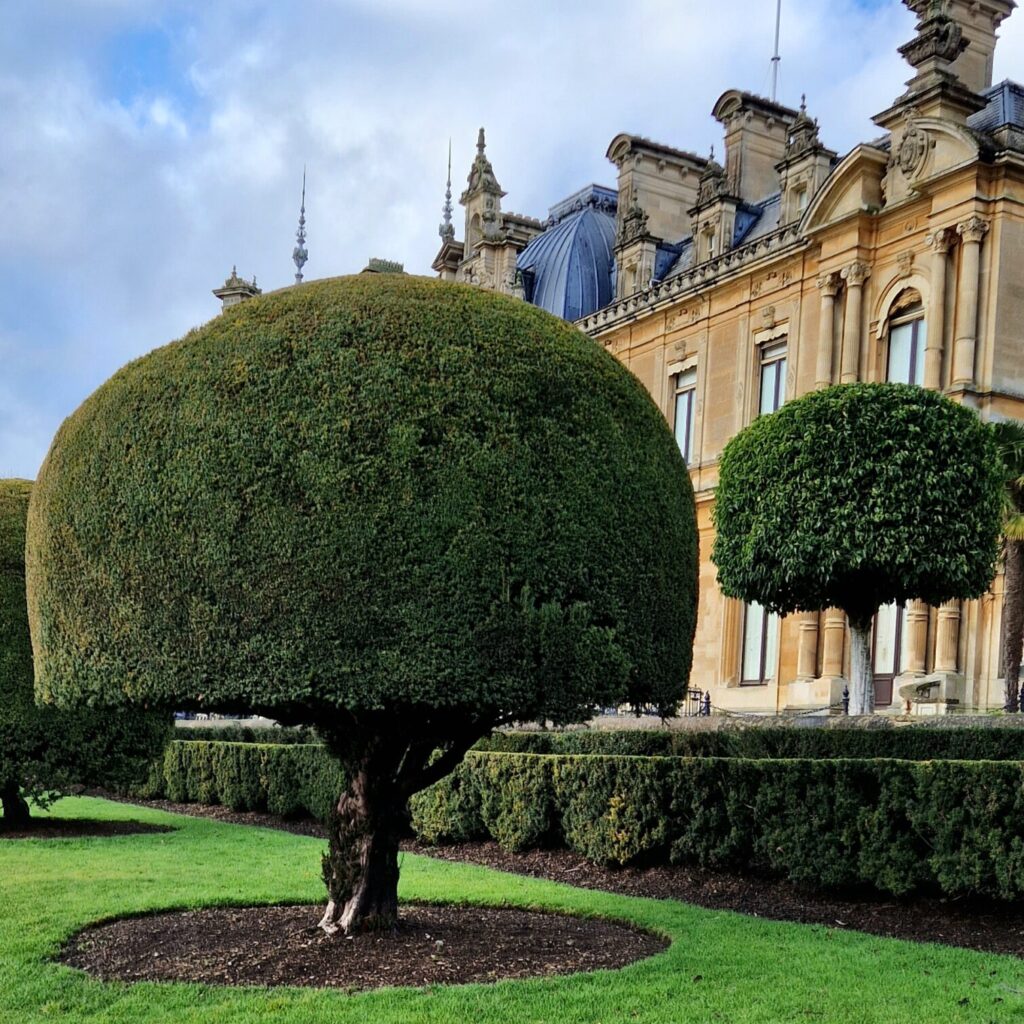
Waddesdon Manor in Buckinghamshire
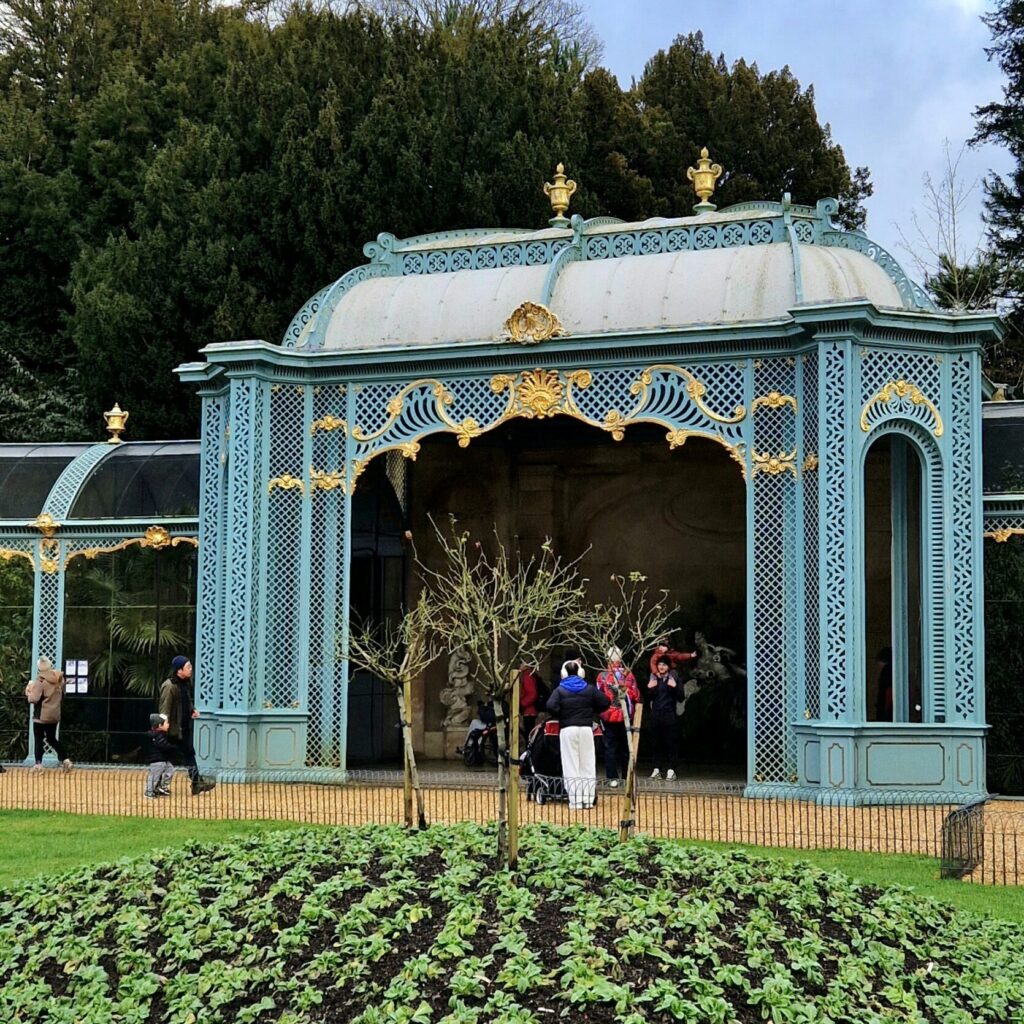
The Aviary at Waddesdon
After Evelina’s death, Ferdinand was joined at Waddesdon by his youngest sister, Alice (1847–1922), who became his close companion. Like her brother, she was a dedicated collector and an expert gardener. Under her care, the gardens reached their height. Alice spent so much time outdoors that she famously had a telephone installed inside the trunk of a tree so she could be reached while working. She also saw herself as the guardian of Ferdinand’s legacy, setting down “Miss Alice’s Rules” — detailed instructions for the care of the collections, many of which still underpin National Trust practice today.
Alice left Waddesdon to her great-nephew James de Rothschild (1878–1957) and his wife Dorothy. After the Second World War, James’s health declined, and with no children to inherit the estate, he began to think carefully about its future. He chose to leave the house, its most important collections and the surrounding grounds to the National Trust, under the guidance of a family-chaired management committee. Today, the Rothschild Foundation continues to manage Waddesdon on behalf of the National Trust and provides the majority of its funding.
Waddesdon is not just about the house. Its gardens are among the finest examples of Victorian garden design, with many original features carefully restored. One highlight is the Rococo-style aviary at the heart of the grounds. Ferdinand was a keen bird enthusiast and took great pleasure in feeding the birds himself, a tradition later continued by Alice.
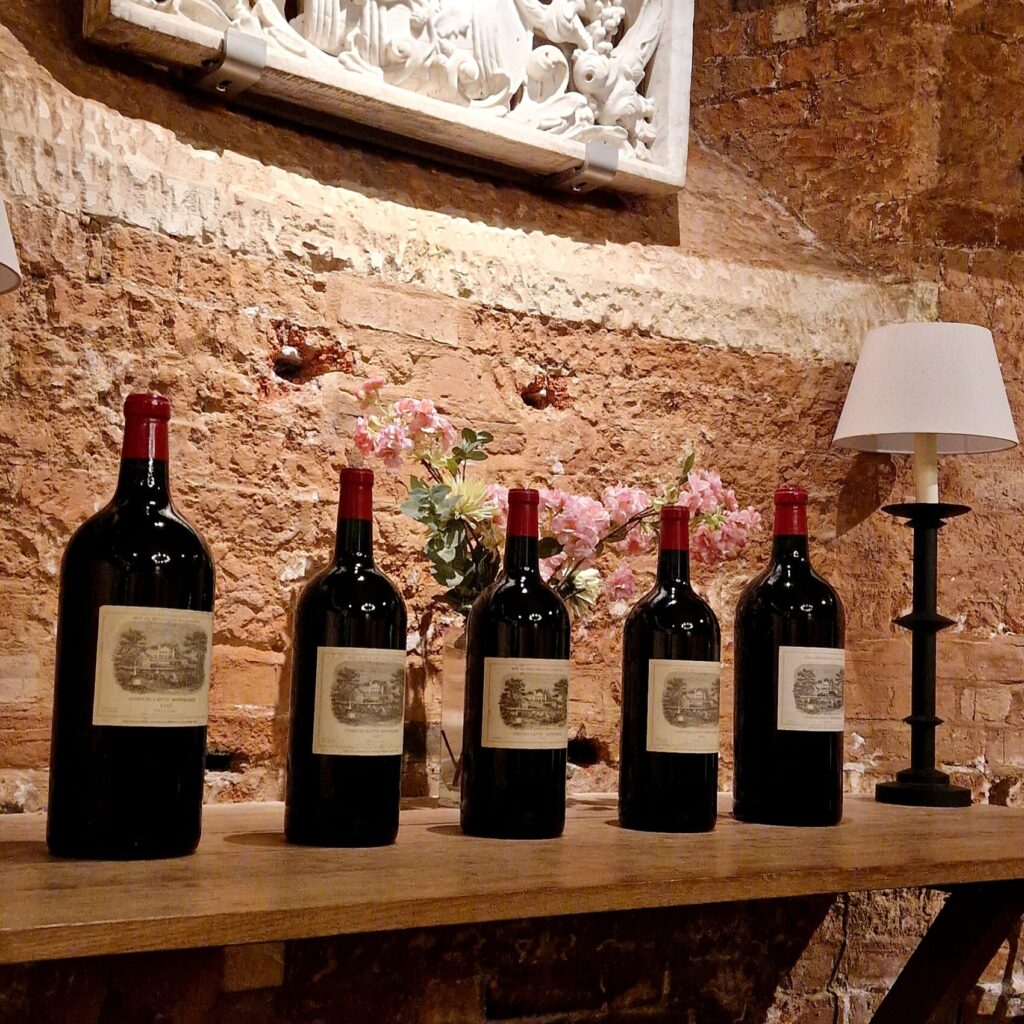
And if, like me, you have a soft spot for good wine, don’t miss the Wine Cellar and the Manor shop. Alongside thoughtful gifts and beautifully designed pieces inspired by the collection, it also offers an excellent wine selection — a fitting final stop after a day steeped in Rothschild taste and history.
The Wine Cellars at Waddesdon
The Wine Cellars at Waddesdon
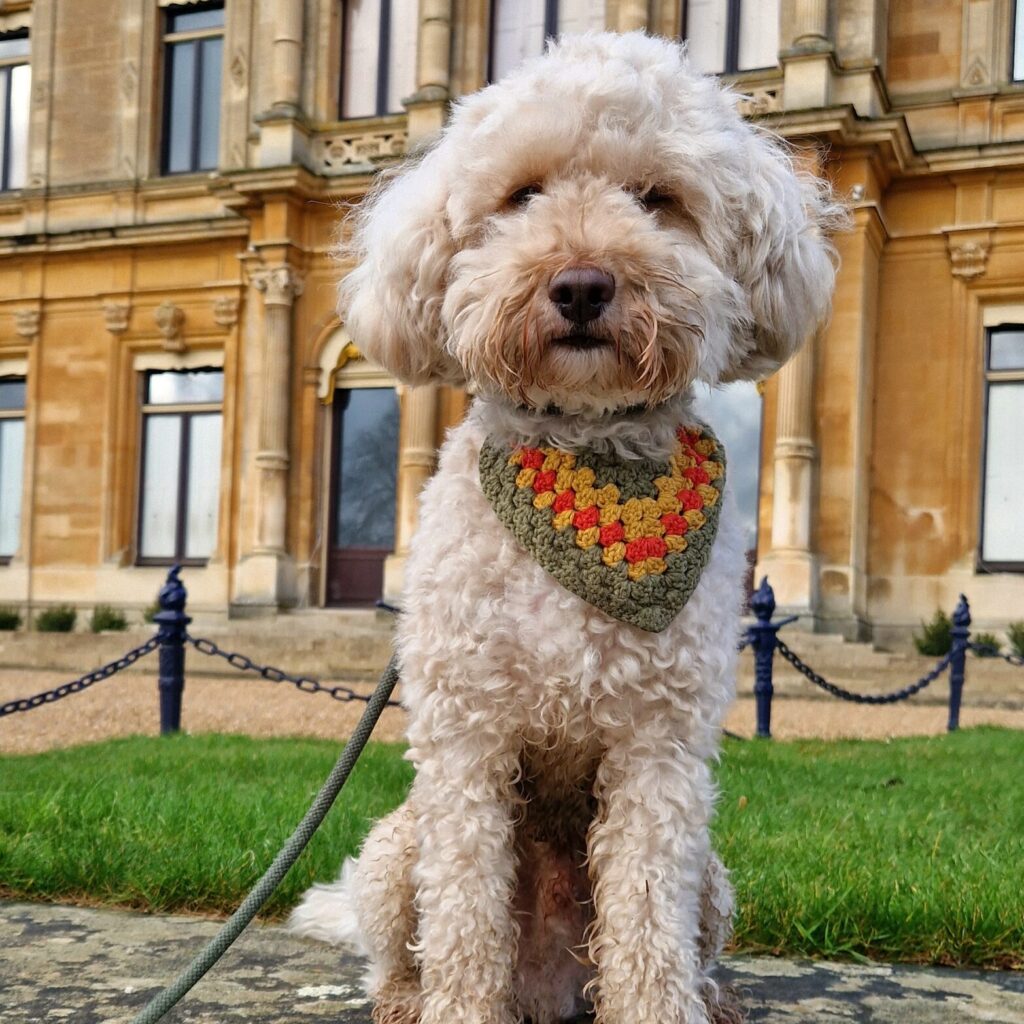
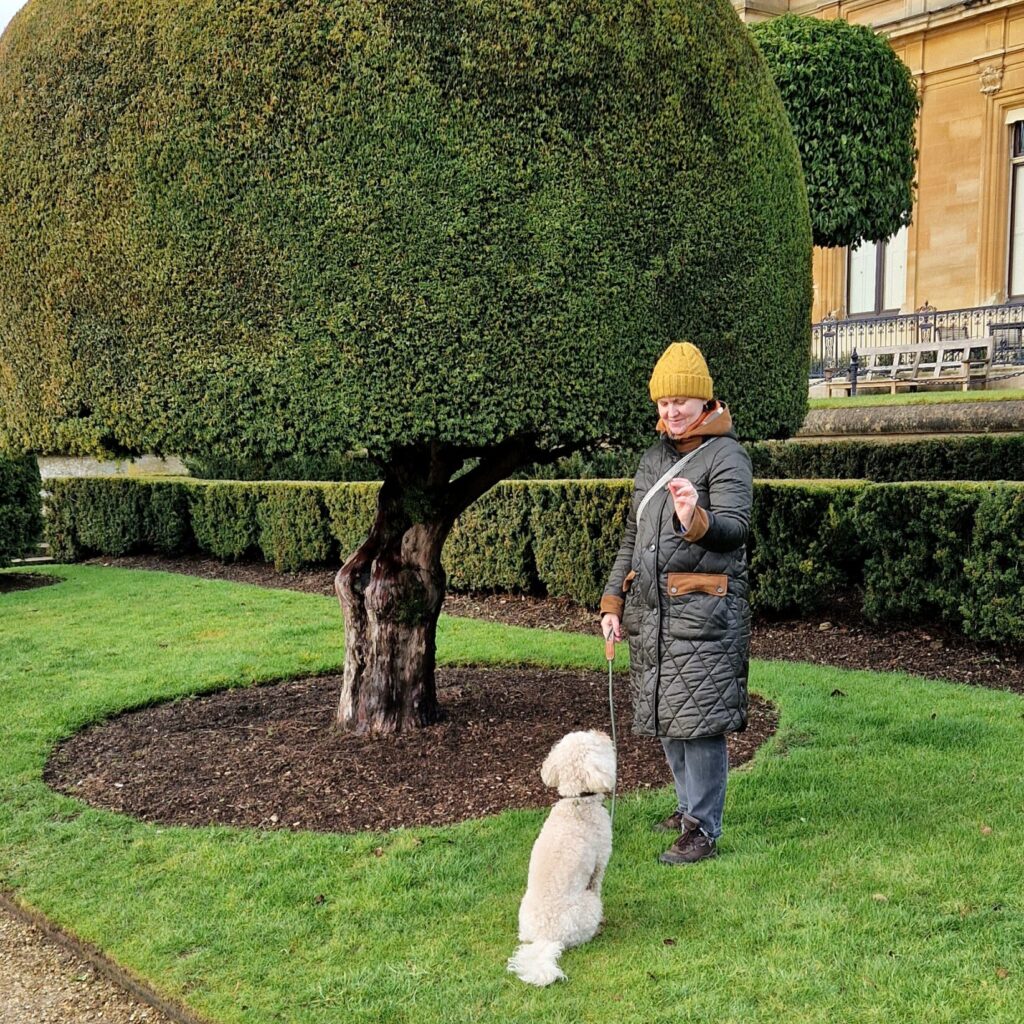
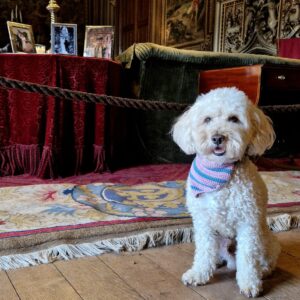
Dogs at Waddesdon Manor
Did you know that Baron Ferdinand had a much-loved poodle named Poupon? He was trained to perform tricks for house guests, including leaping over a course set up in the East Gallery at Waddesdon — a detail that adds a wonderfully human touch to life at the manor.
Today, dogs are welcome across most of the grounds, with the exception of the Aviary and the Woodland Playground. Well-behaved dogs are allowed inside the Stables Café and Stables Takeaway. Unfortunately, dogs are not permitted inside the Waddesdon Manor or the Manor Restaurant.
Opening times
The house is currently closed for winter conservation cleaning and will reopen on Wednesday 25 March 2026.
The Woodland Playground, Miss Alice’s Drive and The Stables are also closed.
The grounds are open Wednesday to Sunday, 10.00–16.00.
Admission fees
£14 for adults (grounds admission),
£27 for adults, £13.50 for children (grounds & house),
or free for National Trust members.
Parking
Ample parking is available and free for visitors. Please note that the walk from the car park to the house takes around 20–25 minutes each way and includes an uphill section. After rain, parts of the route can be muddy, so sturdy footwear is recommended.
Alternatively, a shuttle bus runs from the main visitor car park to the house (£2.50 per adult).