Fancy stepping back in time and discovering how Britain’s noble families once lived?
Would you like to discover fascinating stories behind Britain’s impressive historical buildings?
How about enjoying a stroll around glorious gardens?
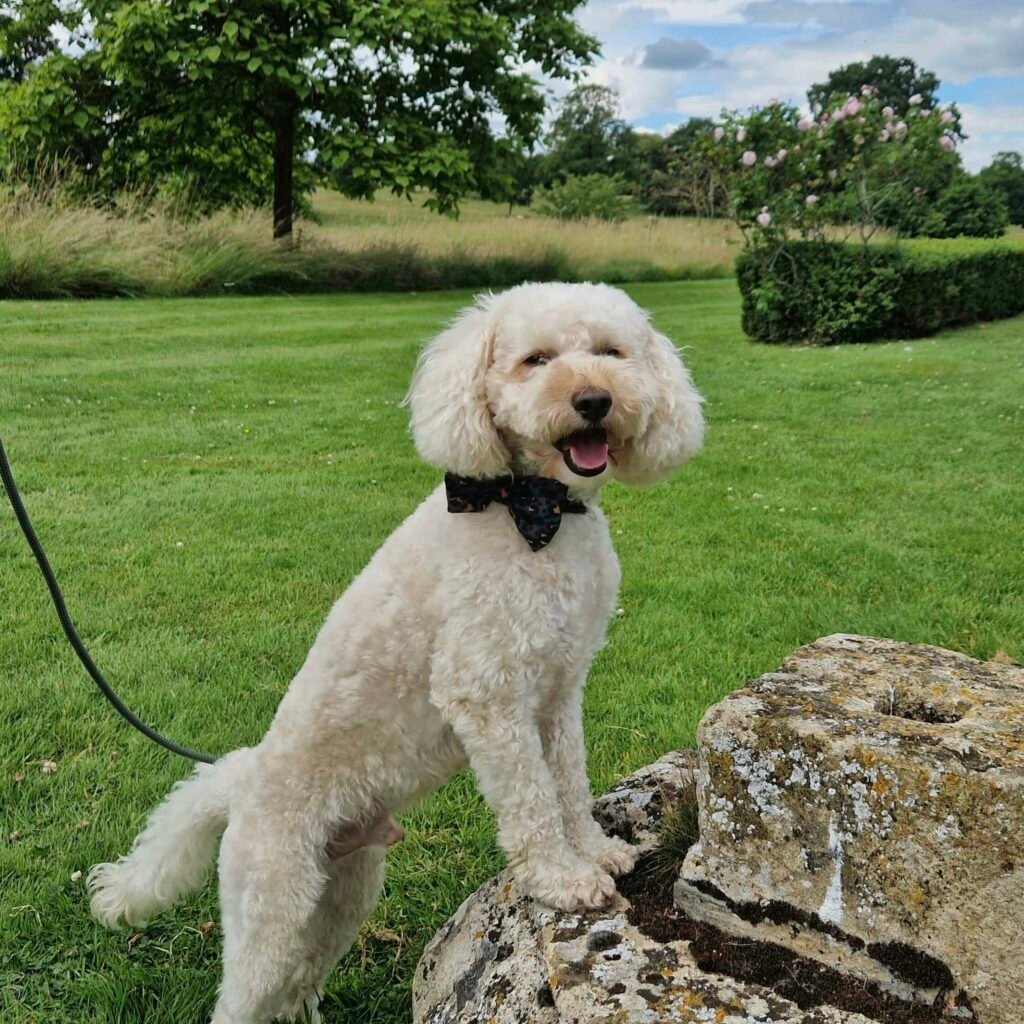
Over the years, Winnie and I have explored some wonderful dog-friendly castles and historic houses across the UK. Some welcome dogs inside the house itself (those are always our favourites!), while others invite them to enjoy acres of parkland, woodland walks and beautifully landscaped gardens. If you’ve ever wondered where you can visit a castle without leaving your dog behind, this guide is for you. From medieval fortresses and romantic ruins to elegant country houses, these are some of our favourite dog-friendly castles in the UK, each with its own story to tell.
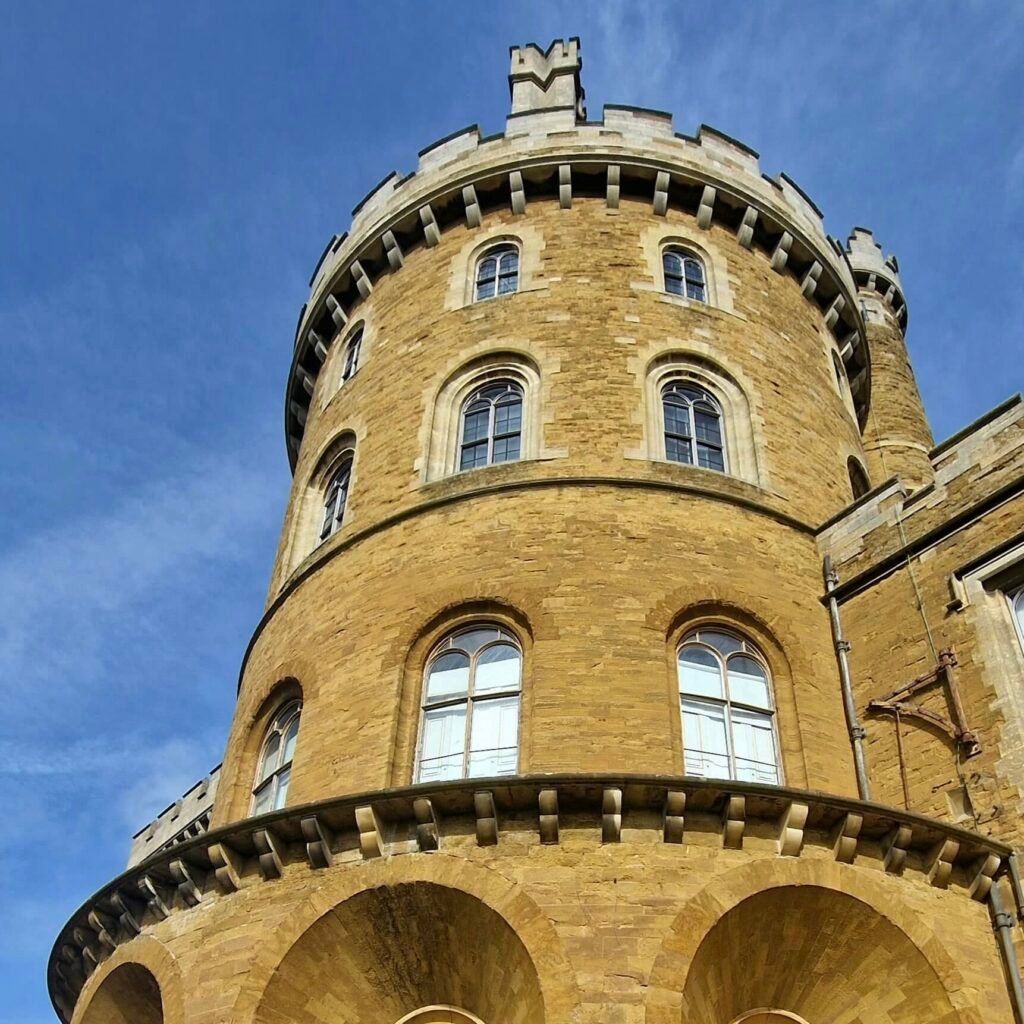
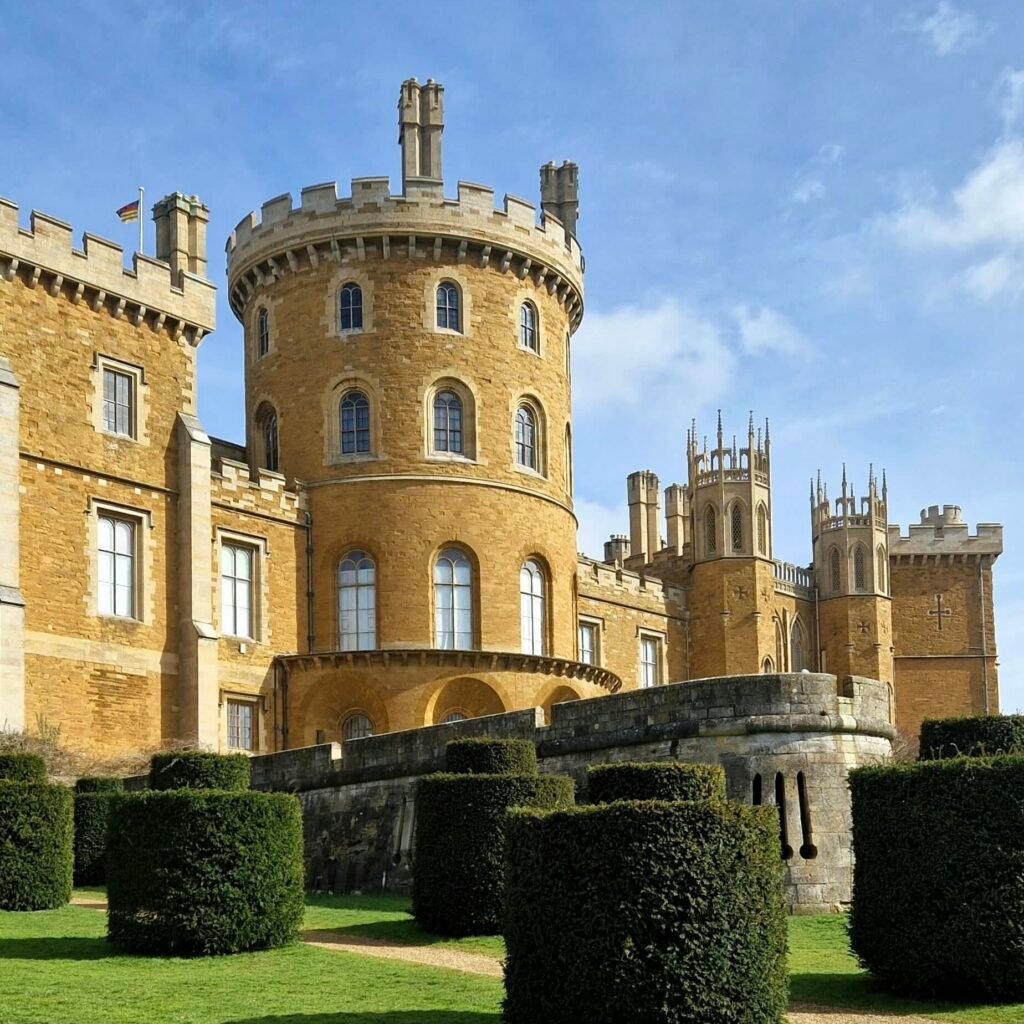
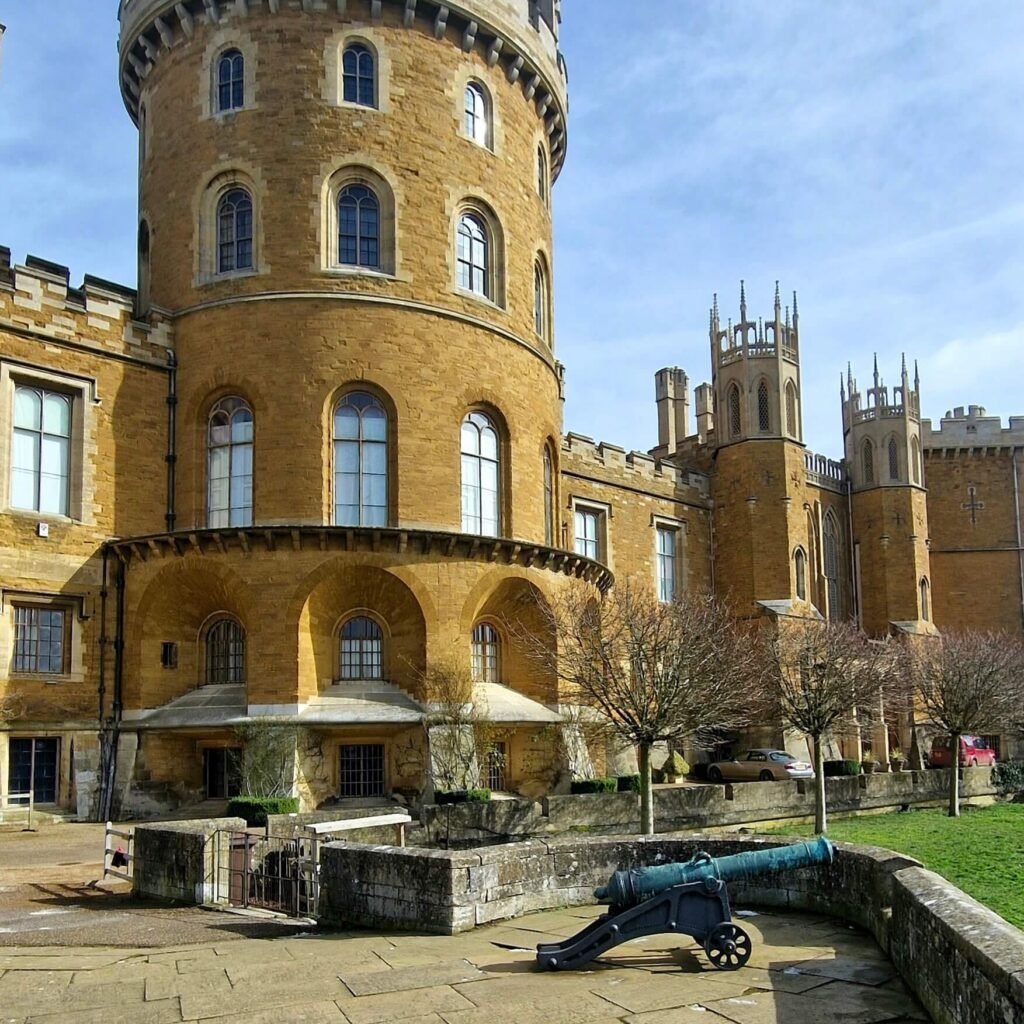
The name ‘Belvoir’ comes from French and means ‘beautiful view’. Surprisingly, it is pronounced ‘Beaver‘ today. This is because the native Anglo-Saxon population struggled to pronounce the French name and simply called it ‘Beaver Castle’.
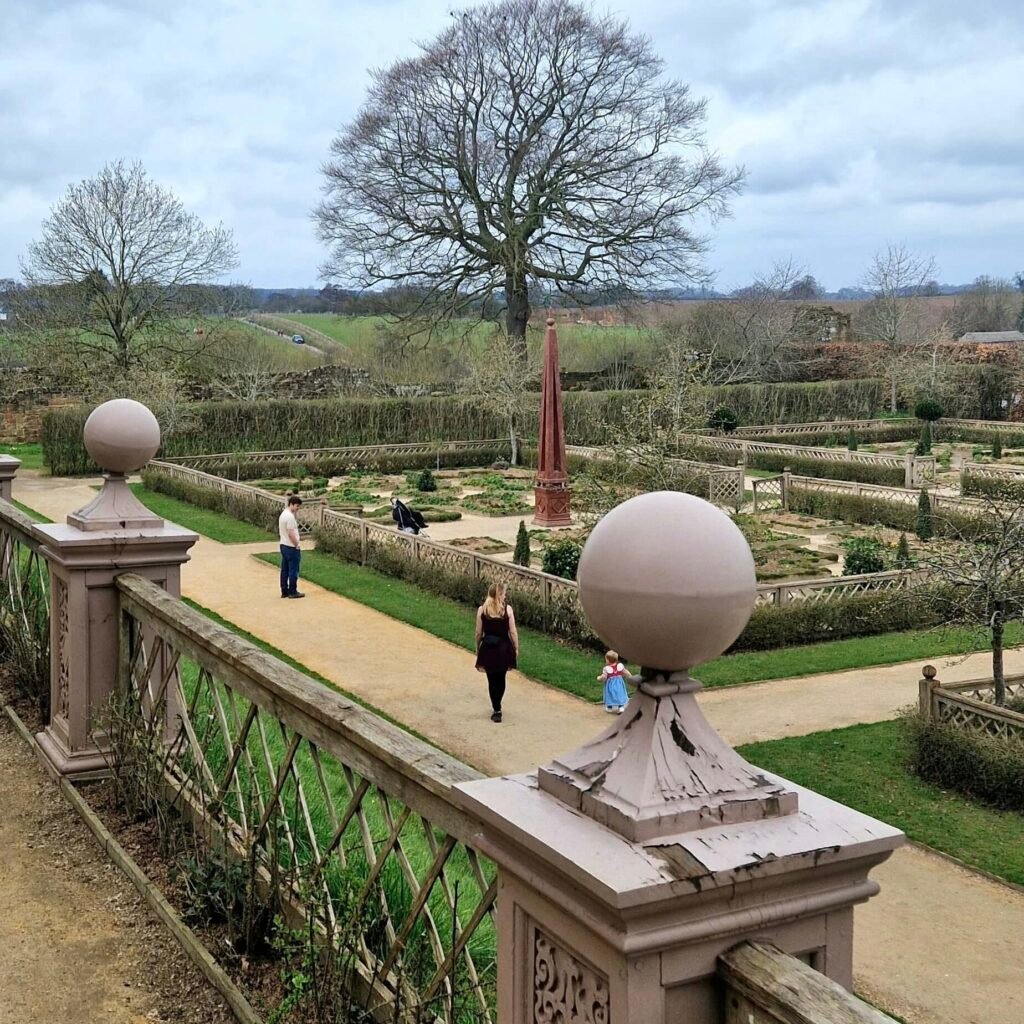
Belvoir Castle’s history dates back to 1067. I bet you didn’t know that Belvoir Castle has been built and rebuilt on the same spot four times! Construction of the first castle began in 1067 on a site ideally suited for defence. But by 1464, the Castle was nearly ruined. The same fate befell the second and third castles. The fourth castle you see today was built between 1801-1832 for the 5th Duke and Duchess of Rutland. Belvoir Gardens were designed and landscaped nearly the same time.
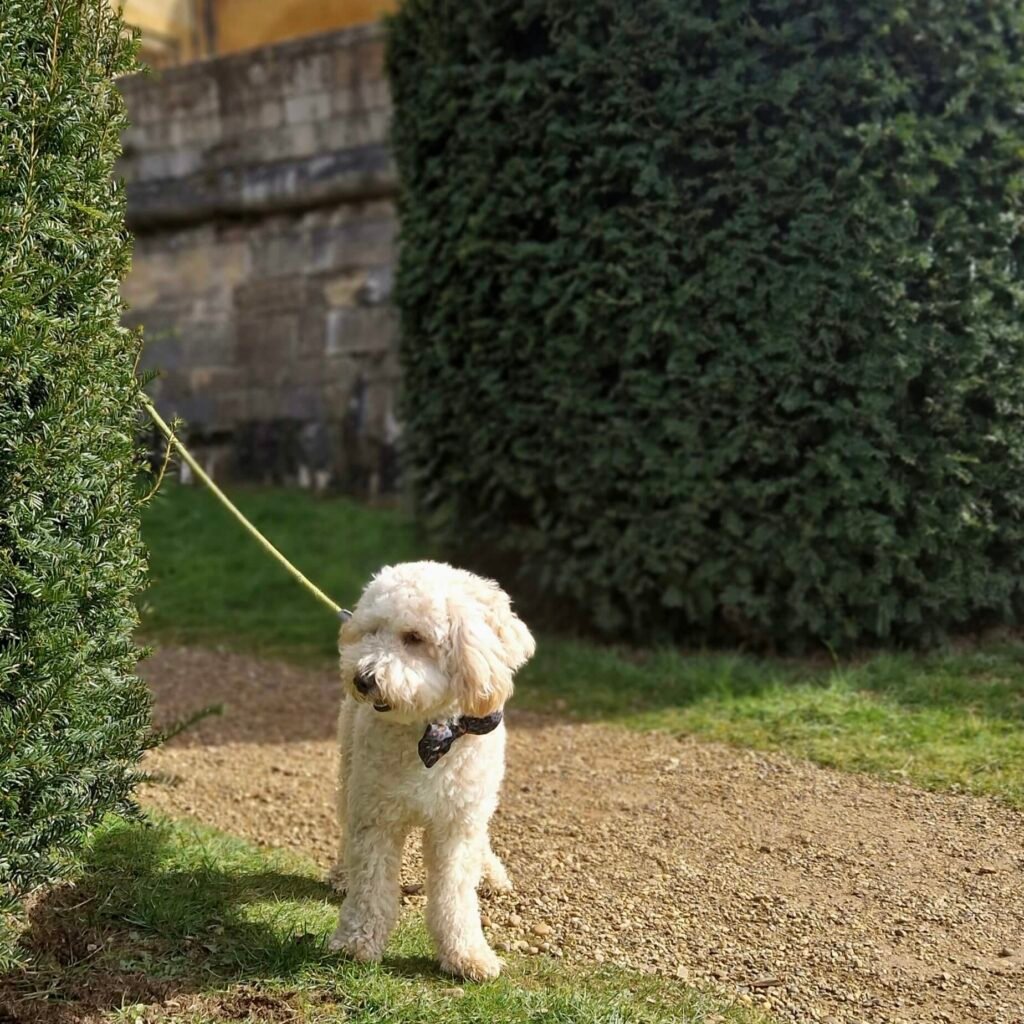
Dogs at Belvoir Castle Dogs are welcome in the grounds.
There are seven different walking trails through formal gardens and woodland like Spiral Walk, Rose Garden Walk, Japanese Woodland Walk, etc. Dogs are also allowed in the outdoor dining areas at the Visitor Hub, Belvoir Bistro, and Balloon Bar.
Unfortunately, dogs are not allowed in the house.
When to visit
Belvoir Castle welcomes visitors throughout the year.
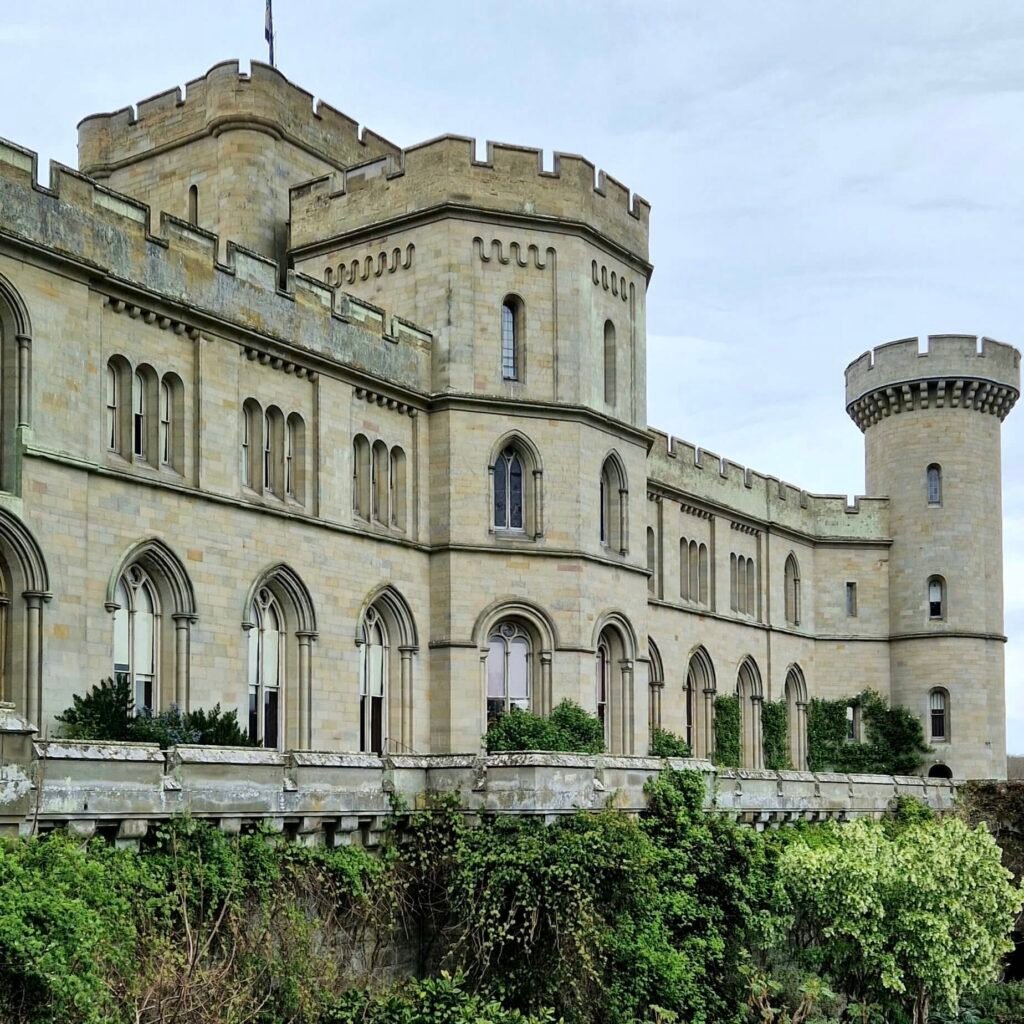
The castle was built between 1811 and 1820 for British politician John Cocks, the 1st Earl Somers. The Somers-Cocks family played an active role in British public life, and Eastnor was more than just a home for them. It became a statement of status, power, and wealth.
To build the castle, John Cocks hired the celebrated architect Robert Smirke, one of the leaders of Gothic Revival architecture and well known for designing the British Museum in London. Eastnor Castle was designed to evoke the image of a powerful medieval fortress, with its imposing towers, battlements, and symmetrical structure.
Dogs at Eastnor Castle
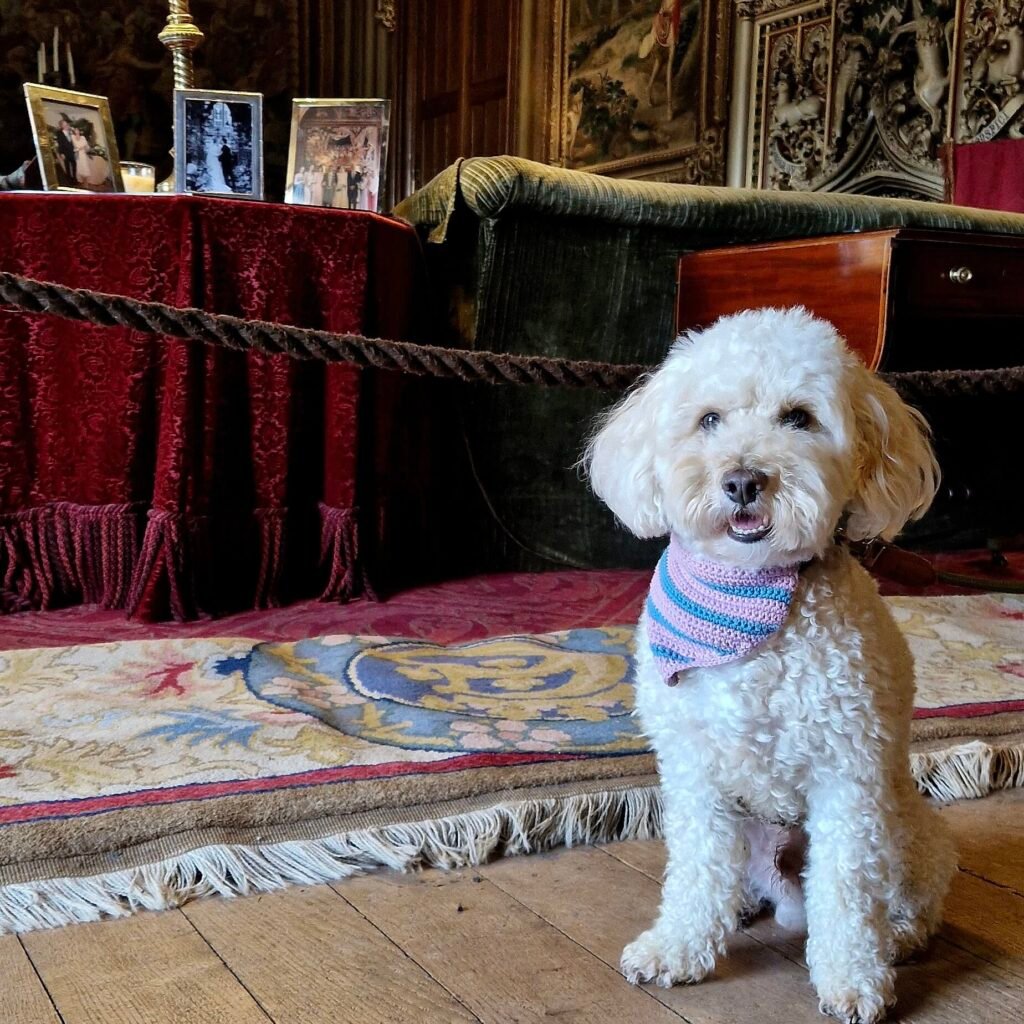
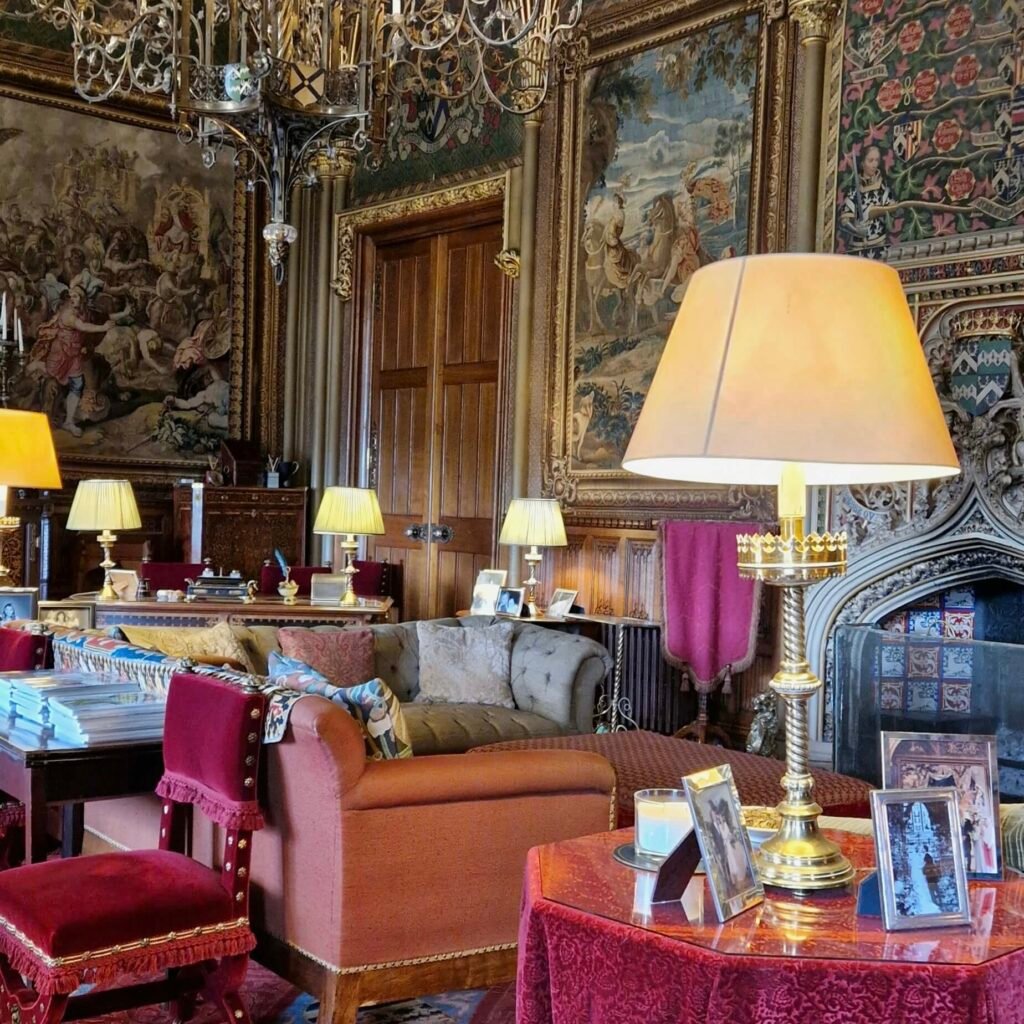
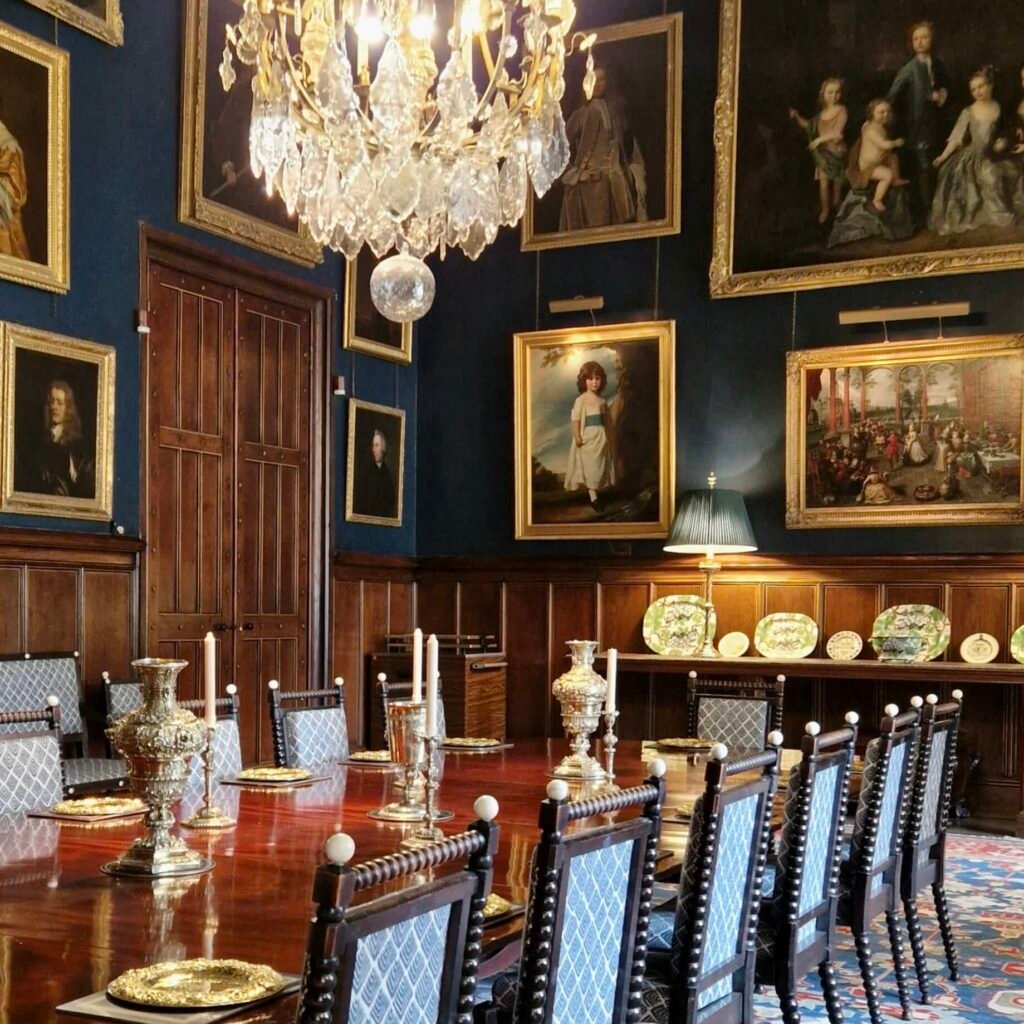
We have to applaud the owners for creating such a dog-friendly place! This is one of the few historic houses where dogs are welcomed both inside the house and around the grounds. There is also a dedicated ‘Dogs-Off-Leads Area’ where dogs are free to run amongst the trees. You can also treat your four-legged friend to an old sock flavoured Waggy Doggy Ice Cream from the Ice Cream Parlour.
When to visit
The castle is open to the public from April until September.
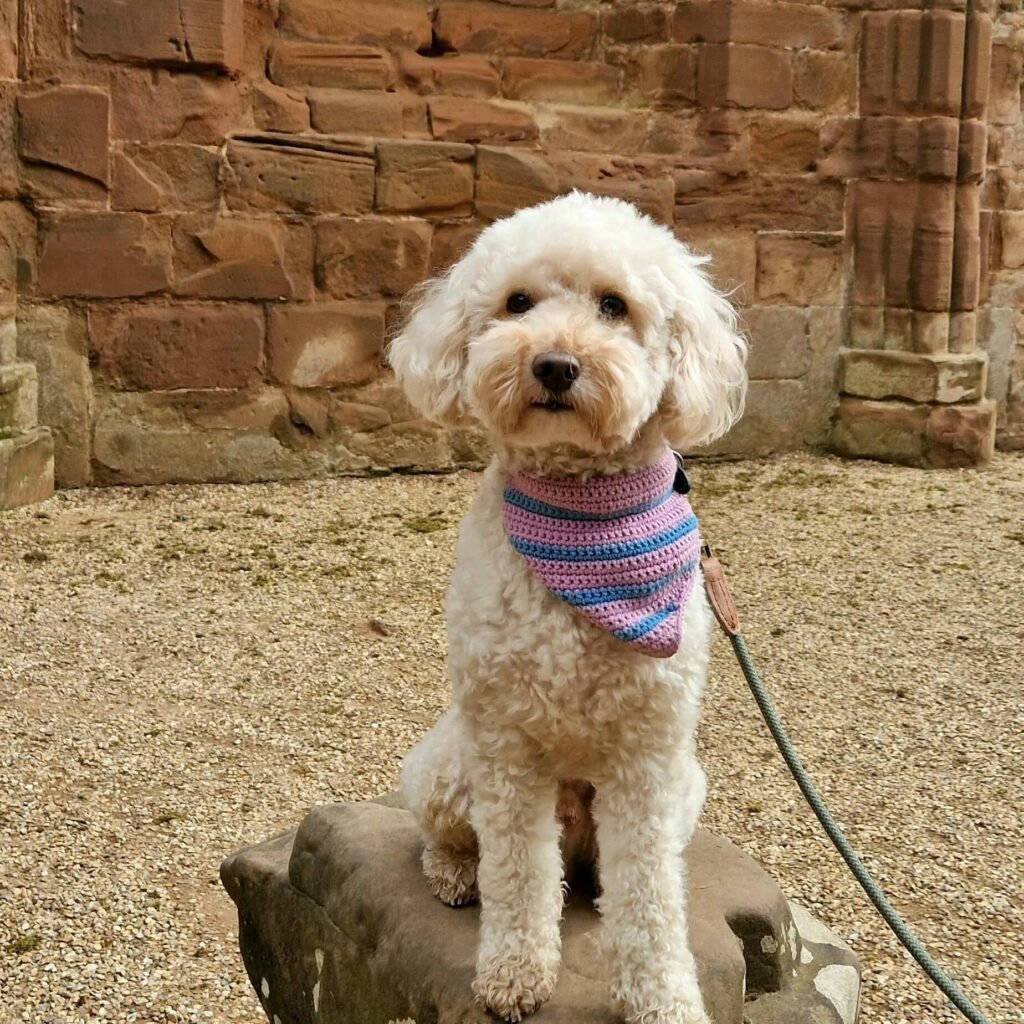
Kenilworth Castle is an impressive ruined castle in the town of Kenilworth. Originally built in the 12th century, the castle was enlarged and improved in the 13th and 14th centuries, and then substantially renovated in the 16th century.
Kenilworth’s greatest period began when Queen Elizabeth I granted Kenilworth to Robert Dudley, the first Earl of Leicester in 1563. The story of their complicated relationship has fascinated people for over 450 years. They had known each other since their early childhood, and when Elizabeth became Queen in 1558, the court was rife with rumours about their love affair. In total, Elizabeth visited Kenilworth Castle four times, and her last and most famous visit was in 1575, when she stayed in the castle for almost three weeks.
Dogs at Kenilworth Castle
Dogs on leads are welcome everywhere throughout the site, including in the Gatehouse where the exhibition tells you the full story of the famous royal romance between Elizabeth I and Robert Dudley. There are also lovely off-lead walks outside of the castle and a big park in the town of Kenilworth.
When to visit
Kenilworth Castle welcomes visitors throughout the year.
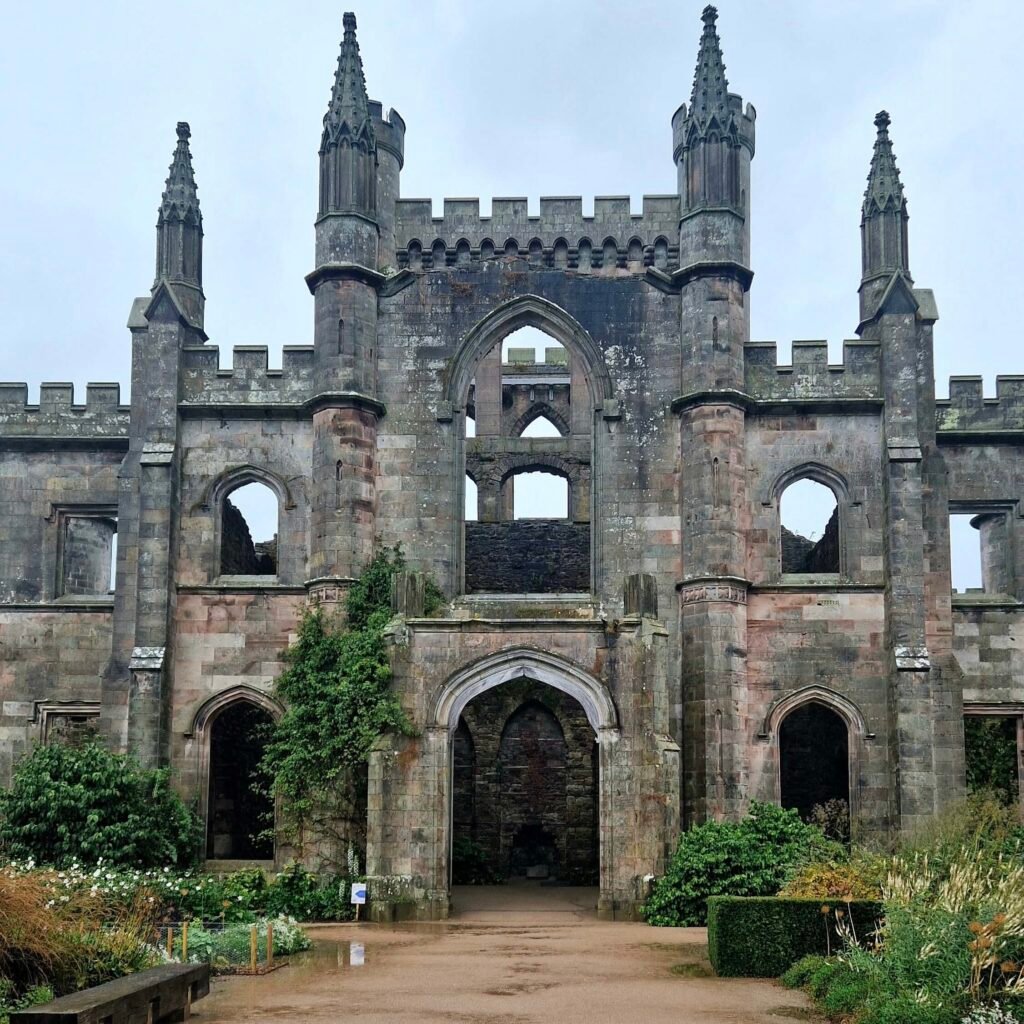
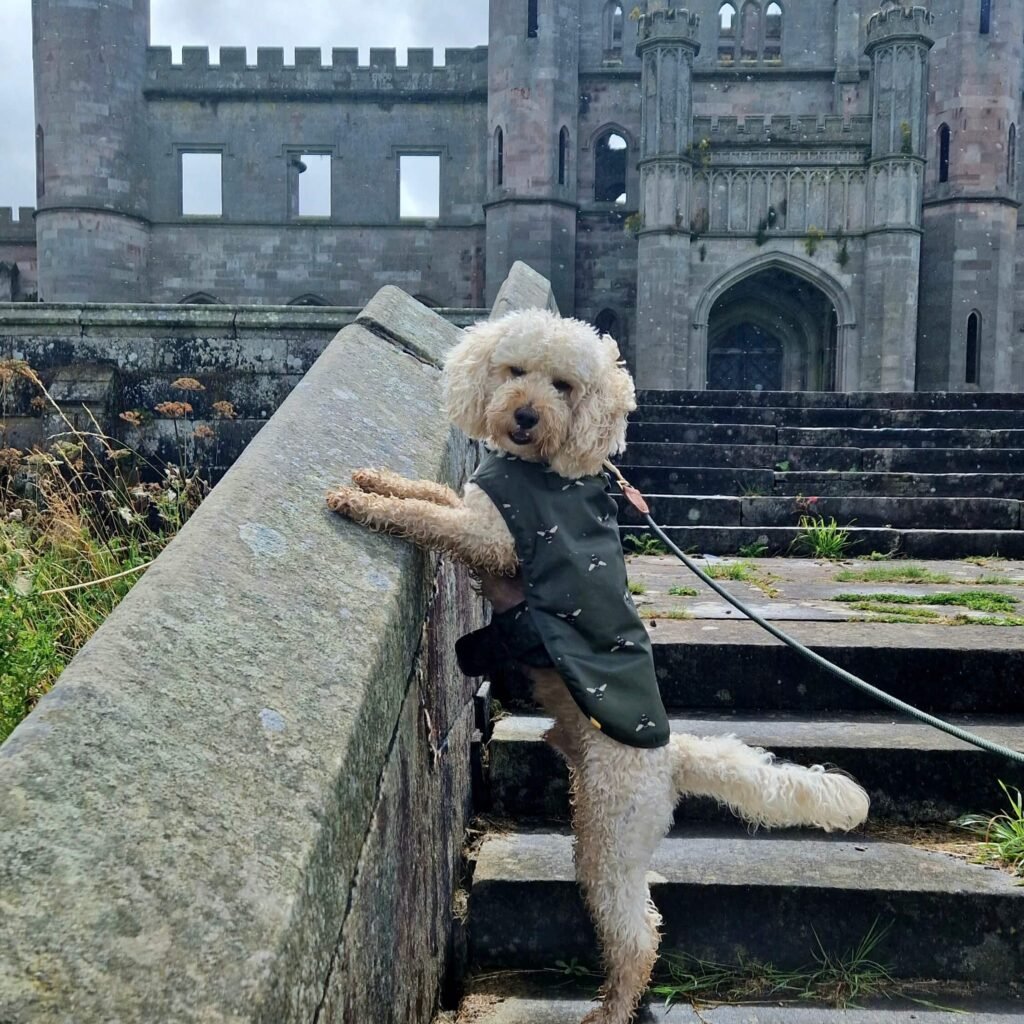
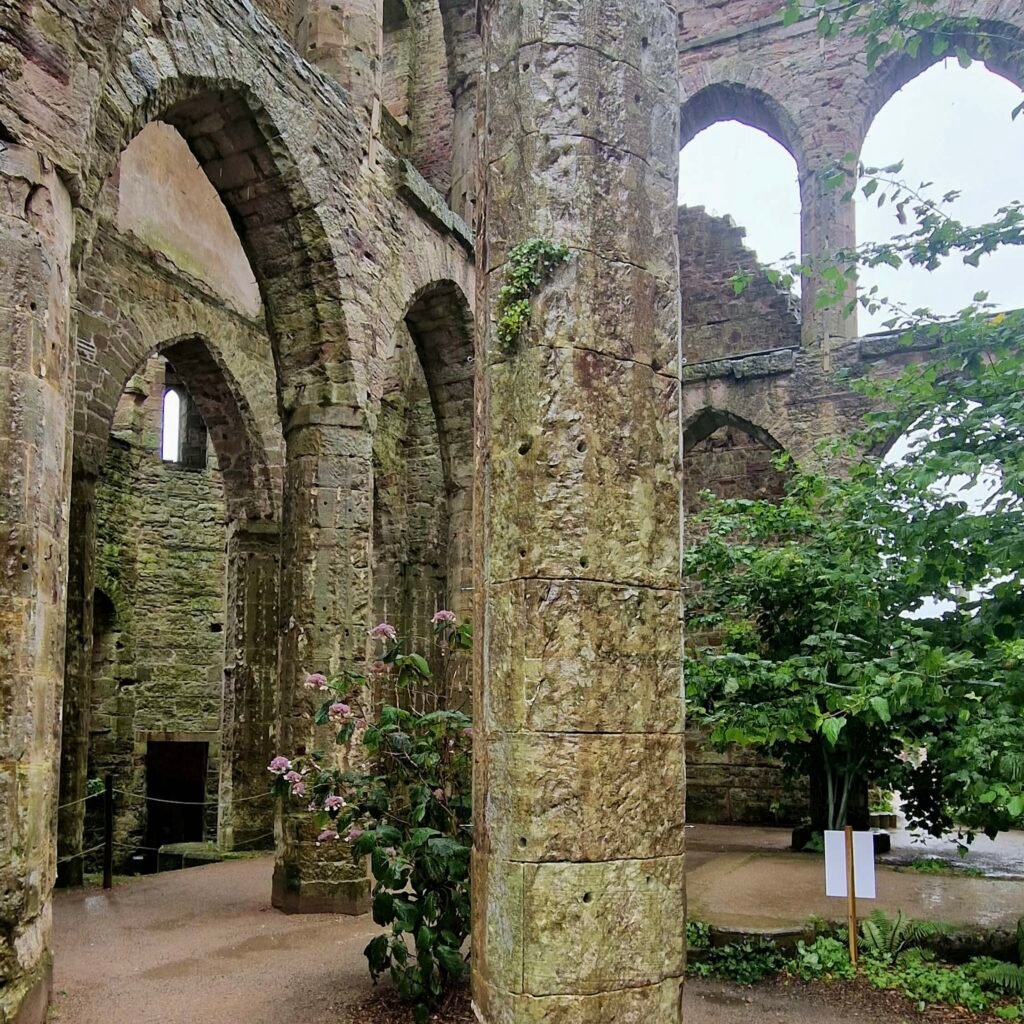
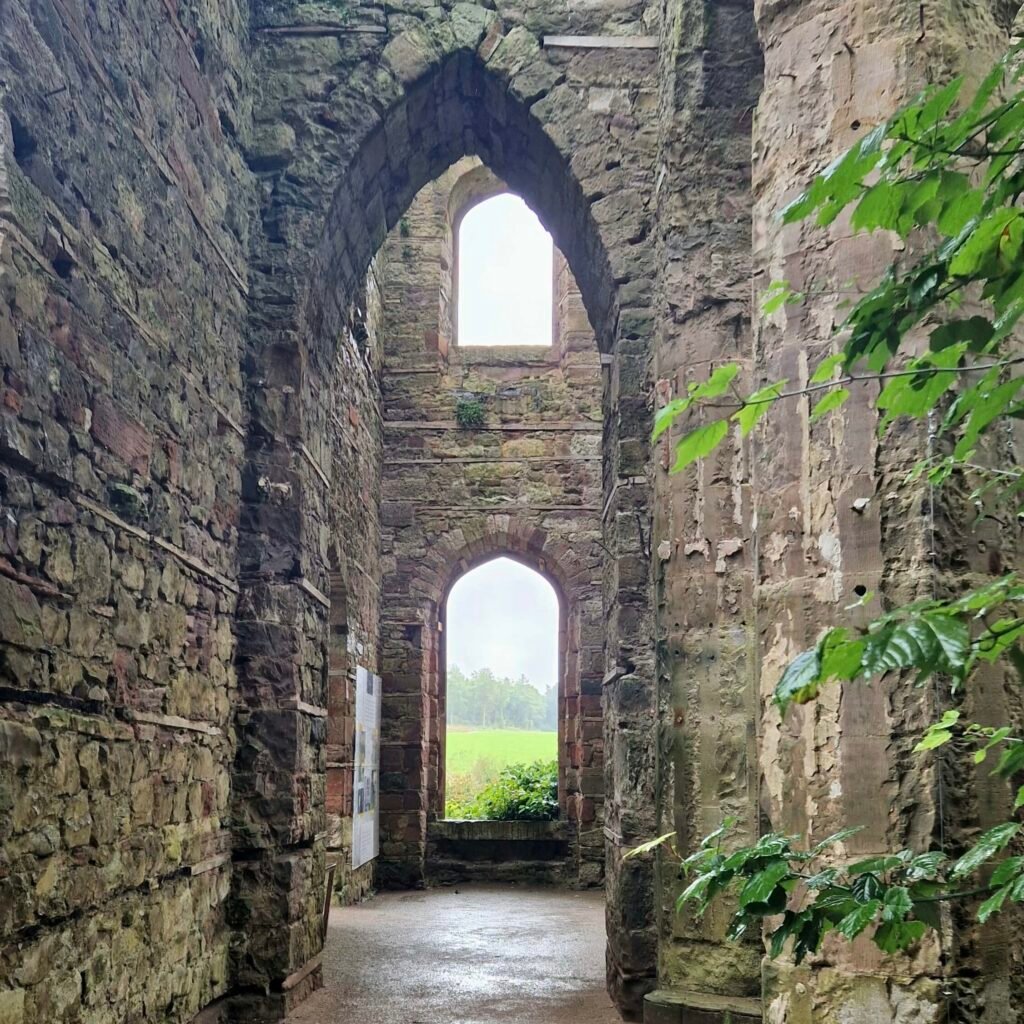
Lowther Castle is an impressive ruined country house with an extensive 130-acre garden in Cumbria, near Penrith. During the Second World War, Lowther Castle was used by a tank regiment. After suffering damage and standing empty for several years, it was returned to the family around 1954. Unfortunately, the family couldn’t afford to maintain the house anymore. The only option to avoid enormous taxes was to partly demolish the house. The roof was removed, some stoneworks were destroyed, and only the facade and outer walls remained.
Now the castle is managed by the Lowther Castle & Gardens Trust. After rounds of investment and renovation efforts, Lowther Castle was opened to the public in 2012, for the first time since 1938. Today, the castle is carefully managed as a historic ruin with extensive well-maintained gardens divided into different zones: Rock Garden, Japanese Garden, Sweet Scented Garden, and Rose Garden.
Dogs at Lowther Castle
Well-behaved dogsare welcome everywhere, apart from the adventure playground.
When to visit
Lowther Castle welcomes visitors throughout the year.
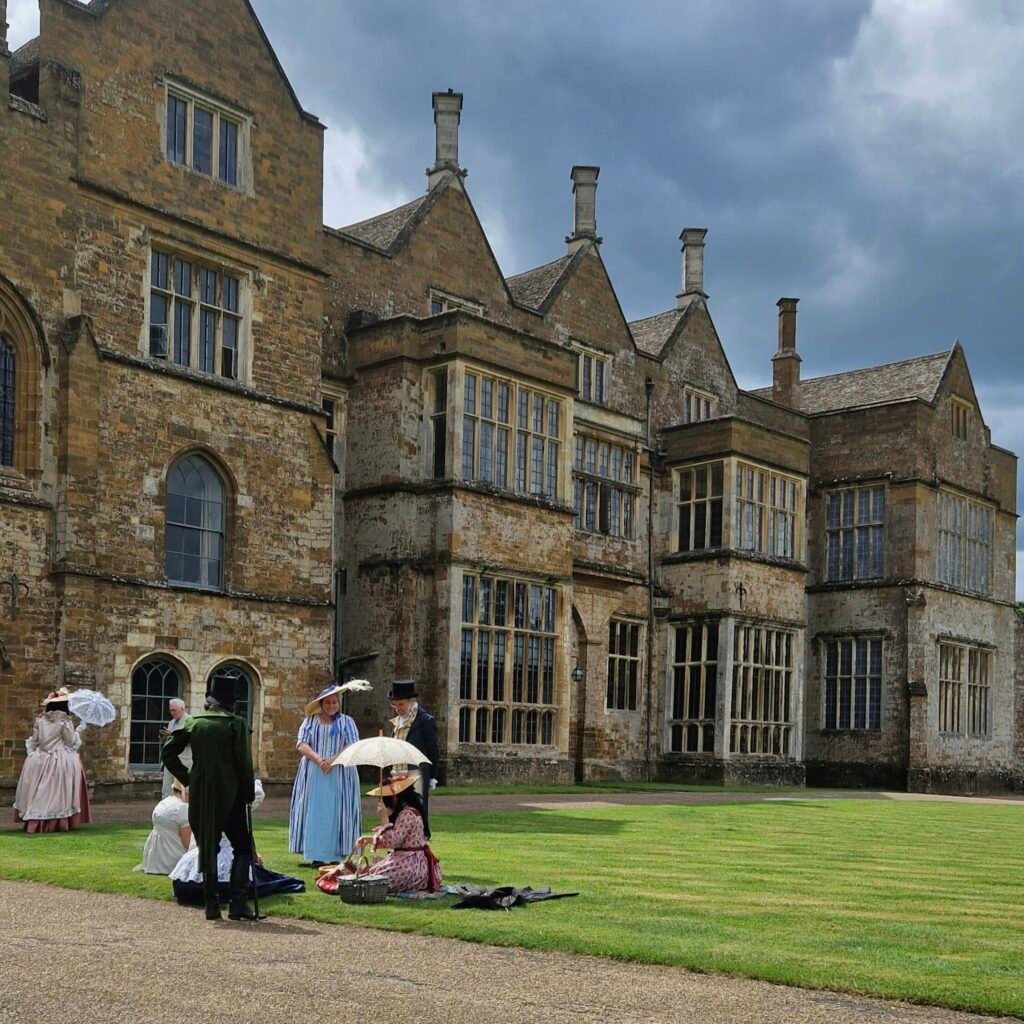
Broughton Castle, a medieval manor house, has been the seat of the Fiennes family, Barons Saye and Sele, since the early 15th century. And it is one of the rare examples of a privately owned castle that has been occupied by the same family for almost 700 years!
Who were among the special guests of the castle? Of course, kings and queens! Look into Queen Anne’s Room, named because Queen Anne of Denmark, wife of James I, slept in there in 1604. The King’s Chamber was used by two kings. King James I visited Broughton Castle four times, between 1604 and 1619. King Edward VII stayed in the castle in 1890.
Dogs at Broughton Castle
Dogs on a lead are very welcome in the park and garden. Unfortunately, dogs are not allowed inside the castle.
When to visit
Broughton Castle is open from 1st April to 30th September only.
DogStaycation Rating
Dogs inside: No
Gardens: Yes
Dog-friendly café: Yes
Time needed: 1–3 hours
Whether you’re looking for a castle that welcomes dogs inside, miles of beautiful parkland to explore, or simply a fascinating day out steeped in history, these dog-friendly castles in the UK prove you don’t have to leave your best friend at home.